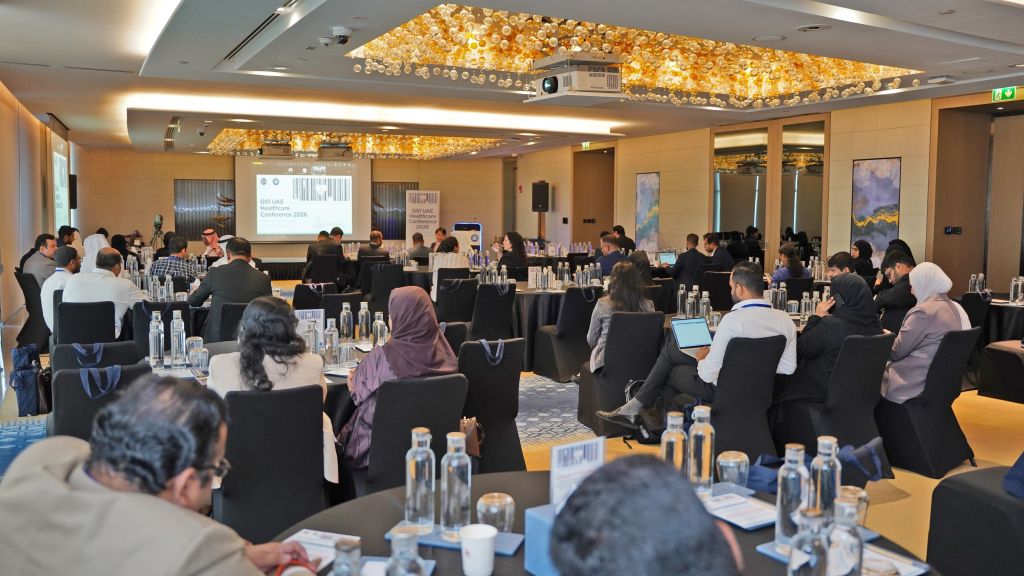
GS1 UAE yesterday convened healthcare leaders, regulators, manufacturers, pharmacies, representatives from more than 20 hospitals, and industry experts at the GS1 UAE Healthcare Conference 2026 to explore how global standards are improving patient safety, strengthening traceability, and increasing operational efficiency across hospitals in the region.
The conference served as a platform for healthcare stakeholders to share practical experiences and insights on implementing standards in real-world hospital environments. Discussions focused on how healthcare organisations can better navigate growing complexity across supply chains, clinical operations, and regulatory requirements.
A key theme that emerged was the shift from viewing standards as a compliance requirement to recognising them as a strategic enabler of more connected, transparent, and data-driven healthcare systems. As hospitals accelerate digital transformation, the ability to exchange accurate, standardised data is becoming critical to improving decision-making and patient outcomes.
Speakers from leading healthcare institutions and organisations, including Cleveland Clinic Abu Dhabi, Prime Health, The Leeds Teaching Hospitals NHS Trust, GMDN Agency, Mecomed, and SNOMED International, shared perspectives on how standards are driving measurable improvements across hospital operations.
“Healthcare transformation today requires a shared foundation that enables stakeholders across the entire healthcare ecosystem to speak the same language, exchange trusted data, and collaborate more effectively. Through the adoption of global standards, healthcare organizations can improve traceability, strengthen patient safety, and build more resilient systems capable of supporting future healthcare needs,” said Maha Unnisa, Healthcare Manager at GS1 UAE.
“As healthcare systems become increasingly complex, supply chains must evolve from operational functions into strategic enablers of care delivery. Standardized identification and data-sharing frameworks provide healthcare organizations with greater visibility and control across their supply chains. This helps improve efficiency, support informed decision-making, and strengthen overall operational resilience,” added Fatima Alsubaihi, Senior Director, Supply Chain Operations at Cleveland Clinic Abu Dhabi.
“Effective healthcare transformation depends on the ability to connect data across the entire healthcare ecosystem. A standardized device language provides a common foundation that enables healthcare organizations to improve procurement, strengthen traceability, support recalls, and generate more meaningful clinical insights. When stakeholders are speaking the same language, better decisions become possible at every stage of the healthcare journey,” highlighted Deniz Bruce, CEO of GMDN Agency.
“Our experience with Scan4Safety has shown that standards can transform the way healthcare organizations respond to operational and patient safety challenges. By improving visibility and traceability across hospital processes, healthcare providers can make faster, more informed decisions while ensuring that patient care remains at the centre of everything they do,” commented Mark Songhurst, Programme Manager at Leeds Teaching Hospitals NHS Trust.
“Healthcare organizations need visibility that extends beyond individual departments and spans the entire patient journey. GS1 standards help create a connected flow of information from product receipt and inventory management through to patient care, enabling greater transparency, improved operational efficiency, and more informed decision-making across healthcare facilities,” noted Jaleel Rahiman, Director of Information Technology & PRIME Digital at Prime Health.
The GS1 UAE Healthcare Conference 2026 underscored a shared commitment to advancing global standards as a foundation for safer, more connected, and datadriven healthcare. By uniting providers, regulators, hospitals and industry partners, the event reinforced the momentum behind standards adoption and highlighted the critical role it will play in shaping the region’s future healthcare landscape.


Leave a comment